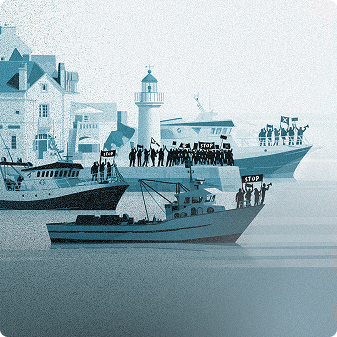
A major European campaign to end overfishing and phase out mega-factory ships over 33 metres in length.
To coincide with the reform of the European budget, BLOOM is launching a major European campaign to put an end to the human, economic and environmental devastation caused by the mega-industrial segment of the European fishing industry. Under this budget, between €3.5 and €7 billion will be earmarked for the fisheries sector for the period 2028–2034.
In a major scientific publication redefining ‘sustainability’ as applied to global fisheries, the world’s leading ocean experts agreed on one key point: for a fishery to be considered ‘sustainable’, it must comply with eleven ‘Golden Rules’, including one ironclad rule: a limit on vessel size. The principle had been established, but the question remained unanswered until now: at what size does a fishing vessel become too large?
It is this ‘maximum tolerable length’ that our scientific work has sought to identify – a threshold beyond which fishing becomes unsustainable, imposing a heavy cost on society, fishers, the marine environment and the climate. This threshold, beyond which we speak of mega-industrial fishing, is 33 metres.
Because the severity of the crises calls for exceptional measures, we demand the phasing out of the 1 per cent of vessels that are the most destructive. We need to put an end to the waste of public money, to preserve the fishing industry, its jobs and its economic value, and to guarantee our food sovereignty in the years to come.
We call for a ban on counter-fishing and for the phasing out of the 638 European mega-factory vessels over 33 metres in length.

by including in the European funds currently under discussion a mandatory programme for the permanent cessation of all EU fishing vessels 33 metres in length or more. We estimate the cost of scrapping this 1% of the European fleet at €2.7 billion. Beyond the environmental and social benefits derived from scrapping the most problematic vessels in the fleet, this will put an end to the financial and political exploitation of the sector by this mega-industry, finally putting the power back with fishers to regain control over their representative bodies, their quotas and their own future.
Find out moreHow? By moving away from destructive and energy intensive fishing methods:
This includes a ban on aid for fishing for overexploited stocks and for operators engaged in illegal, unreported and unregulated fishing.
Find out moreHow? By making the following information publicly available:
of the EU’s fishing vessels are between 33 and 45 metres long. As of July 2026, there are 638 of them.
of mega-industrial vessels are equipped with gear towed behind the vessel, which has a significant impact on marine ecosystems, such as trawl nets, seines and dredges.
of these vessels spend their time catching fish outside European waters, operating outside the territory they are supposed to serve and often to the detriment of coastal communities in third countries
is the average distance at which mega-industrial vessels make their catches, which is greater than the distance as the crow flies between Lisbon in Portugal and Reykjavik in Iceland (3,481 km).
per year is paid by the European Union to 0.1% of the European fleet to enable them to fish in the waters of third countries.
of European waters are considered to be ‘problem areas’ by the European Environment Agency (EEA, 2026).
per year, on average, is the minimum amount of public funding from which this mega-industry is exempt, thanks to indirect support: the fuel tax exemption.
of the main fish stocks in the North-East Atlantic are outside safe biological limits (STECF, 2026).
vessels in the European mega-industrial fleet has been convicted, or is actively suspected, of committing offences.
is the term proposed by Claire Nouvian, Baptiste Morizot and Daniel Pauly to describe mega-industrial vessels that are 33 metres in length or above.
is the maximum size limit for fishing vessels, the "maximum tolerable length" (MTL) that we are calling on the European Union to adopt to put an end to counter-fishing.
are the three European countries with the largest mega-industrial fleets.
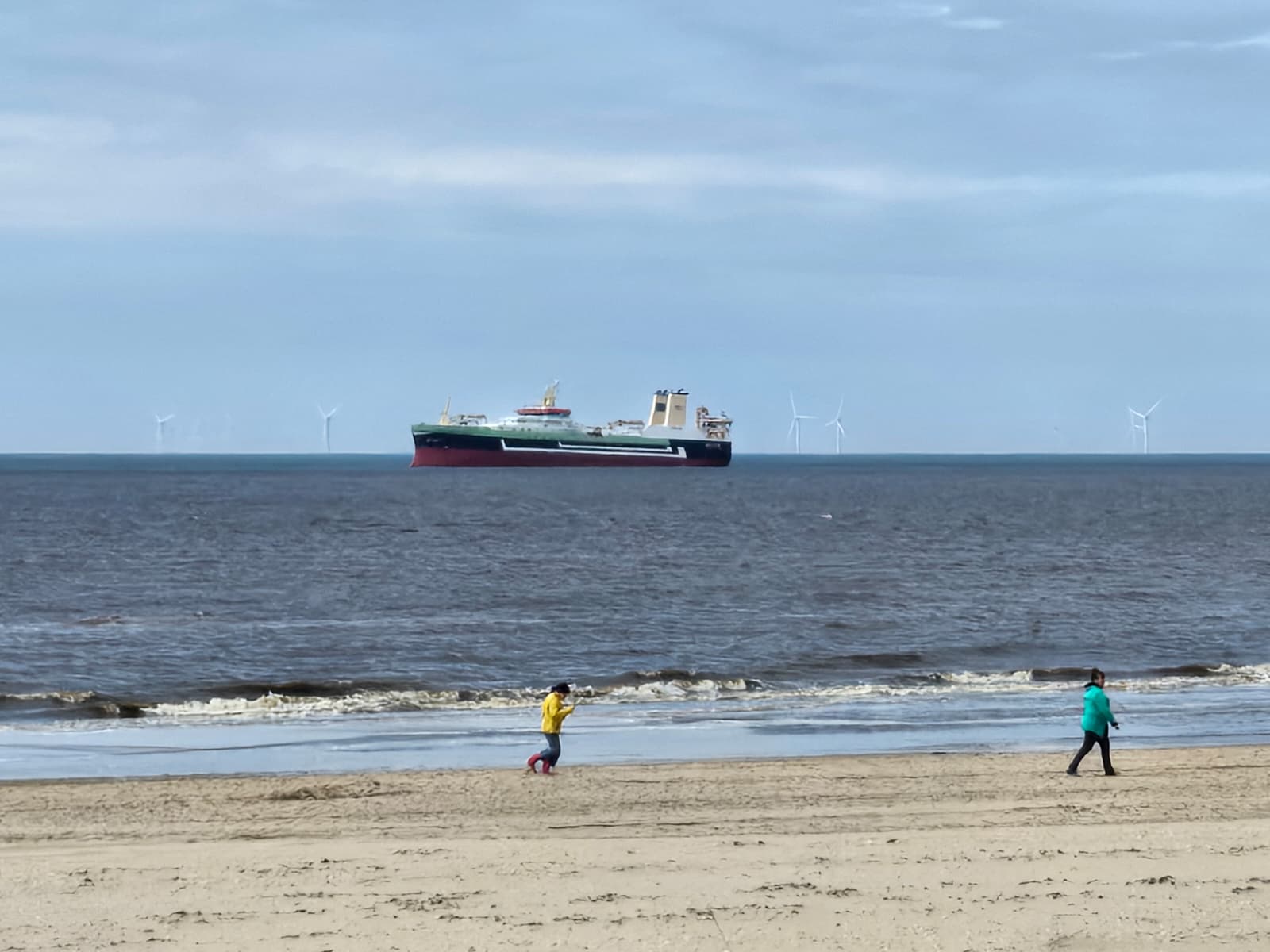
The EU is faced with a pressing issue: our marine ecosystems are in a catastrophic environmental condition. EU waters are the most trawled in the world, fish stocks are overfished and fishing jobs are literally disappearing. Between 1970 and 2022 the number of fishers has fallen to a quarter of what it was in France and Spain, to a fifth in Germany, and to an eleventh in Denmark.
The EU budget for 2028–2034 is currently in the process of being negotiated. This chance will not arise again for the next seven years.
We’re calling on the Presidents of the European Parliament’s largest left-, centre-, and right-wing groups, which together form a majority in Parliament, to determine the outcome and finally take a stand for Europe’s fishers, for a sustainable economy, for our food sovereignty and for a healthy ocean.

Whenever something is wrong, something is too big. But where do we draw the line? We are caught up in technical systems that have become destructive: that which liberates seems irrevocably intertwined with that which wreaks havoc. This has given rise to the two forms of complacency of our age: technophilia, which promises that the system will repair the damage it causes, and technophobia, which idealises a return to the ‘small-scale’ as the only sensible course of action.
In order to pinpoint the moment when something becomes its opposite and is corrupted, a clearly defined setting was required: the ocean. Since 1970, the ocean has lost more than half of its life. Industrial fishing has achieved the impossible: it has emptied the ocean. Ports are closing, small-scale fishing fleets are dying out, and fishers from the Global South are being crushed. The word ‘fishing’ encompasses two diametrically opposed realities: one lives off the sea and lets it live; the other devours it, and everything that depends on it. In order to distinguish between the two, it took the combined efforts of an activist, a scientist and a philosopher. Together, they have drawn the line beyond which the activity becomes its own negation: ‘counter-fishing’. This book sets out to disarm it.
The method they have devised can inspire us wherever a system destroys what it claims to produce: where does ‘counter-agriculture’ begin? What about ‘counter-forestry’, even? Their approach rejects binary oppositions between environmentalists and economic advocates, and invites us to forge unexpected alliances. This book broaches the possibility of an unprecedented ecological and social victory, with a vision to reclaim the ocean.
Reclaim the Ocean will soon be available in English.

Claire Nouvian
Founder and Director of BLOOM

Baptiste Morizot
French philosopher and specialist in living organisms

Daniel Pauly
Professor at the University of British Columbia and world-renowned expert in marine resources
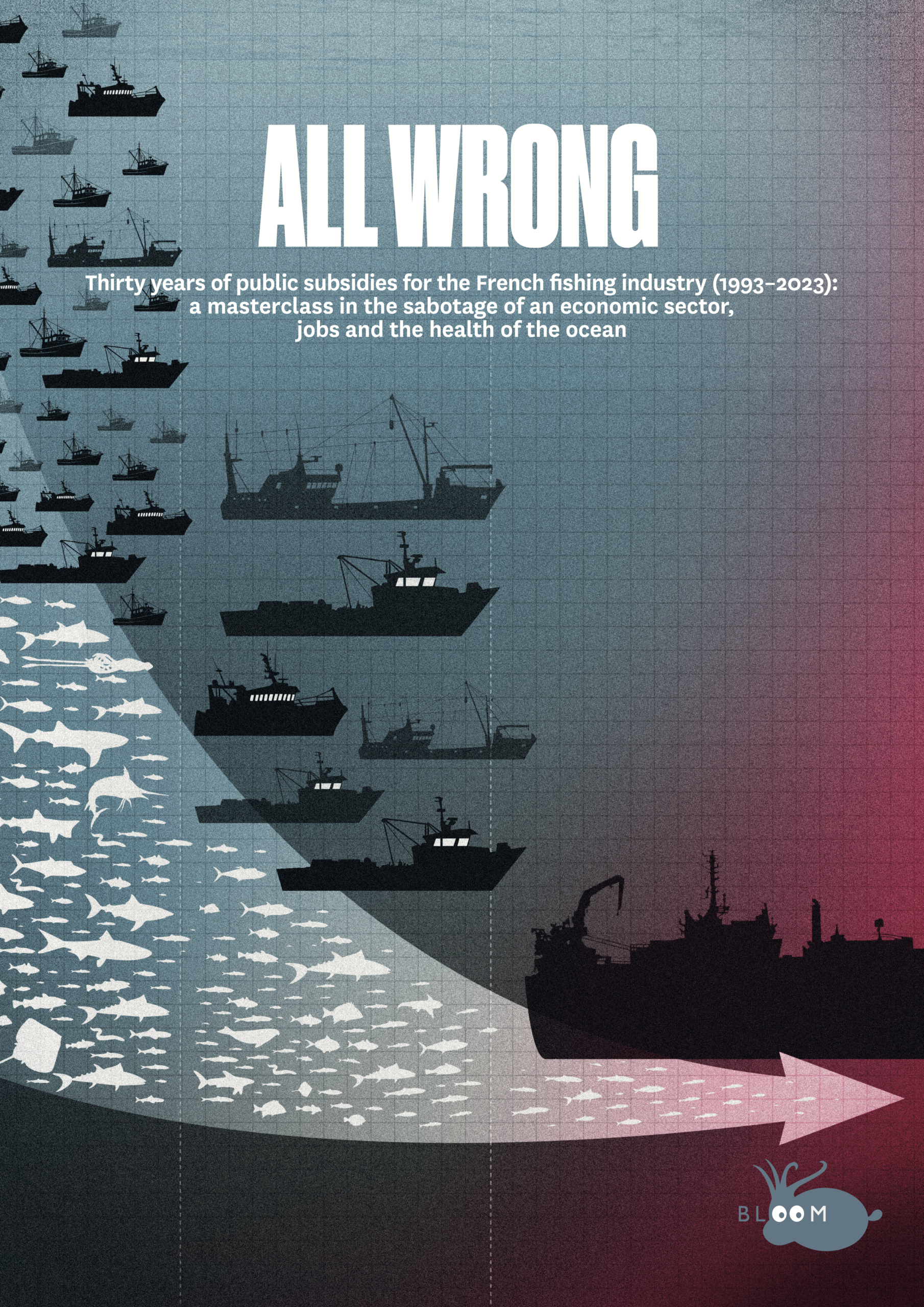
Thirty years of public subsidies for the French fishing industry (1993–2023): a masterclass in the sabotage of an economic sector, jobs and the health of the ocean.
Read the report

The maximum tolerable length for the ocean.
Read the report

Eighty years of ocean destruction caused by oversized fishing fleets.
Read the report

The first comprehensive assessment of more than 30 years of European public funding for the fishing sector.
Read the report
23 October 2026
Read more
In a major scientific publication redefining ‘sustainability’ as applied to global fisheries, the world’s leading ocean experts had agreed on one key point: for a fishery to be considered ‘sustainable’, it must comply with eleven ‘Golden Rules’, including one ironclad rule: a limit on vessel size.
The principle had been established, but the question had remained without a clear scientific answer until now: at what size does a fishing vessel become too big? It is this ‘Maximum Tolerable Length’ (MTL) that our scientific work has identified. Our analysis, combining numerous indicators, has revealed a threshold: 33 metres.
Why 33 metres? Beyond this size, fishing activity loses its roots; it is not merely counterproductive. It comes at a high cost to society, to fishers, to the marine environment and to the climate. 33 metres is not the threshold at which fishing deteriorates; it is the point at which it loses its roots. Beyond this limit, fleets, detached from their home waters, become detached from the impacts they cause. This threshold is not arbitrary. It lies at the intersection of several indicators:
The point of harm: beyond 33 metres, 84% of the gear on board is classified as ‘towed’, mainly bottom or pelagic trawls and demersal seines, which have a significant impact on the marine environment.
1% compared with the entire sector: there are only 638 vessels over 33 metres in length across the EU, representing just 1% of the European fleet.
An average fishing distance of 4,000 km: for vessels over 33 metres, 50% of their fishing time is spent outside European waters, beyond 200 nautical miles. On average, they fish 4,384 km from their home port, a long way from the ports and territories they are supposed to serve.
Vessels of an ‘inhuman’ scale, according to Brittany: Brittany, France’s leading fishing region, describes its fleet – 98% of which consists of vessels under 33 metres – as ‘fishing on a human scale’, implying that vessels larger than this are involved in operations that have lost all sense of proportion.
A threat to food security: 33-metre vessels catch half of the European fleet’s total fish volume, mainly intended for extensive processing – sometimes into fish oil and fishmeal – with a portion going directly for export. This model falls far short of fulfilling the promise of food security touted by the mega-industry
We propose, for once, to put European taxpayers’ money to good use – and for the last time in this regard – to fund the dismantling of vessels 33 metres in length or more. We propose paying once to resolve the issue once and for all. We estimate the cost of scrapping these vessels over 33 metres in length at between €2.5 and €2.7 billion over seven years. This initial estimate is intended to cover the depreciation of the vessels, with the remainder going towards compensating seafarers and supporting them in transitioning to new practices, or even new careers. Whilst this sum may seem substantial, it is important to bear in mind that phasing out vessels over 33 metres and transferring part of their quotas to more sustainable fishing practices would yield inestimable benefits, such as the restoration of ecosystems and an increase in jobs on smaller vessels. Furthermore, it is not necessarily the responsibility of the public authorities to bear the full cost of these €2.7 billion. The funds could be shared between European funds, national funds or contributions, and private funds (the shipowners themselves).
The dismantling of this mega-industry affects just 638 vessels (out of a fleet of around 60,000). Their scrapping will free up quotas, which can then be allocated to smaller fleets serving local markets, as well as to a few larger vessels, up to 33 metres in length, that are part of already more industrialised supply chains but practise low-impact fishing methods – without bottom trawling, for example. Our proposal thus enables us to maintain a diversified fleet, minimising environmental impact whilst maximising employment benefits.
Furthermore, dismantling the mega-industry also means abandoning models and products that are harmful to society. Products specific to the mega-industry are compatible neither with the rhythms of the sea nor with the creation of collective wealth. This is the case with products such as canned tuna (mainly sourced from enormous freezer tuna seiners, and which is also contaminated with mercury), surimi, or other highly processed products of this kind, farmed salmon or farmed prawns, which are partly fed on small fish caught by the mega-industry.
Lastly, it is important to note that part of the mega-industry’s output does not go to the European agri-food sector, as a proportion of the catch is exported directly.
To answer this question, two distinct areas must be considered: European waters and non-European waters.
As regards European waters, foreign powers simply cannot come and fish without a prior agreement with the European Union.
As for non-European waters, in areas where fishing is not restricted by fisheries agreements or quotas – such as bottom trawling in the Falkland Islands or tropical tuna fishing – Russian and Chinese vessels are already fishing for some of the species targeted by European vessels, and are not going to wait for the European vessels to leave before coming to fish.
Lastly, none of the measures adopted by the European Union – or which may be adopted – to combat the mega-industry and, more generally, to promote the social and environmental sustainability of fisheries, should be circumvented by imports based on this model. Mirror measures will need to be put in place to ensure that products from foreign fleets entering the European market are subject to sustainability requirements comparable to those imposed on European operators, thereby preventing any distortion of competition. The EU has already demonstrated its ability to do this in other areas: it prohibits the placing on the market of products that have contributed to deforestation or forest degradation (Regulation 2023/1115).